
How You Behave
Sep 08, 2026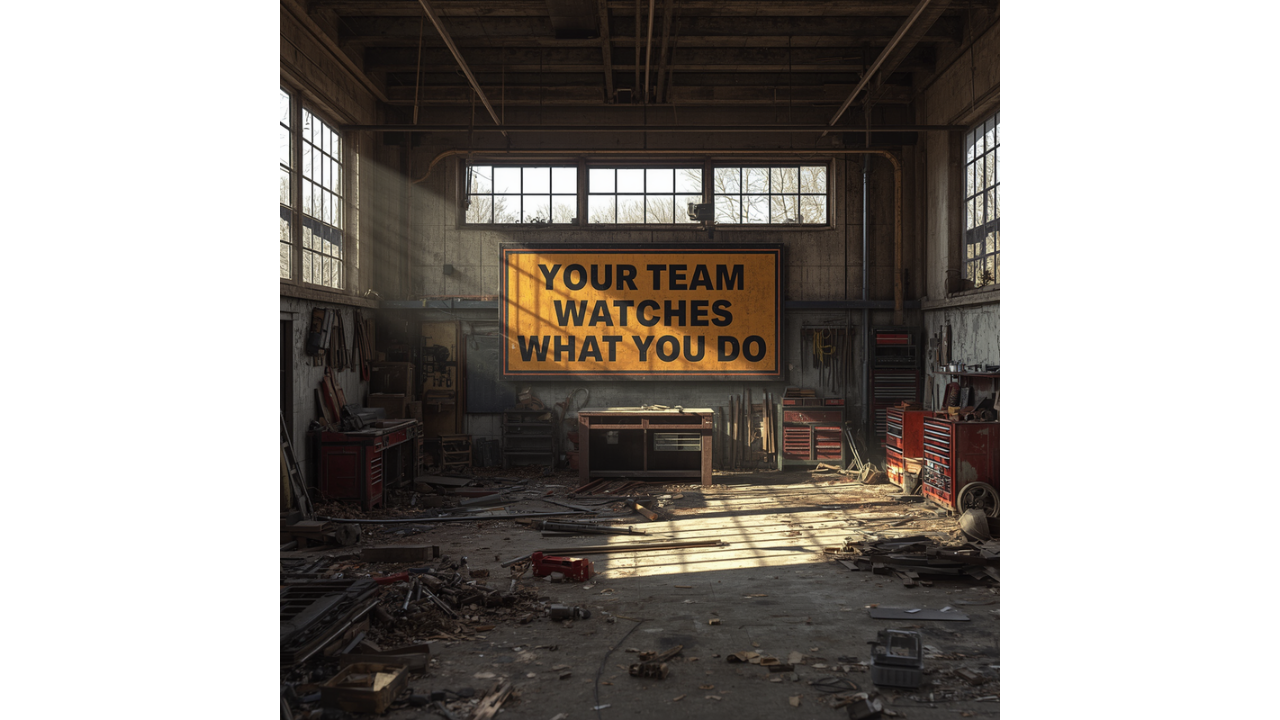
Your team pays more attention to what you do than what you say.
Tell people to stay calm, then explode when the schedule gets tight? They notice.
Demand accountability, then make excuses for your own mistakes? They notice that too.
The owner’s behavior becomes the unwritten rulebook of the business.
A shop can have core values on the wall, weekly meetings on the calendar, and SOPs neatly organized in a binder. None of it matters if the owner’s daily behavior sends a different message.
Shop culture is being trained every single day.
Not by the handbook.
By the owner.
Here’s what that looks like in a real shop—and what can be done about it.
When the Owner Becomes the Bottleneck
A shop owner we’ll call Mike had a good team.
Good technicians. Good advisors. Plenty of work.
But almost every day felt like chaos.
The schedule would get backed up. A part would arrive late. A technician would uncover another issue during diagnosis.
Suddenly, Mike was in the middle of everything.
He interrupted the advisor.
Questioned the technician.
Moved cars around.
Changed priorities.
Then changed them again.
By 3:00 p.m., everyone was frustrated.
Mike’s biggest complaint was that his people needed to take more ownership.
But his team had learned a completely different lesson.
Every time something went wrong, Mike took over.
Eventually, they stopped making decisions.
Why risk making the wrong call when the owner was probably going to jump in and change it anyway?
Accountability created another problem.
Mike wanted repair orders closed on time. He expected inspections to be completed correctly. He wanted technicians clocking accurately.
Those were reasonable expectations.
But when Mike forgot something, being busy became the explanation.
When an employee forgot something, it became a performance issue.
The team noticed.
Slowly, the culture changed.
People waited to be told what to do.
Problems got pushed uphill.
Small issues became bigger issues.
Mike thought he had an employee problem.
What he really had was a leadership behavior problem.
The turning point came when Mike started paying attention to his own reactions when something went wrong.
Instead of immediately jumping in, he started asking:
“What do you think we should do?”
Instead of fixing every problem himself, he gave his people room to solve it.
When mistakes happened, he stopped looking first for someone to blame and started asking:
“What broke in the process?”
He also became more willing to acknowledge his own misses in front of the team.
Forgotten follow-up? He owned it.
Changed direction too quickly? He admitted it.
Created unnecessary confusion? He corrected it.
Within a few weeks, something started to change.
His team began bringing solutions instead of only bringing problems.
Meetings got shorter.
The advisor stopped checking with Mike before every small decision.
Technicians became more willing to speak up early when a job started going sideways.
And that change has real financial value.
Consider the math.
If five employees each lose only 20 minutes a day waiting for approval, second-guessing decisions, or working around confusion, that equals 100 minutes every day.
That adds up to more than eight hours every week.
One full workday can disappear because the team doesn’t feel confident making decisions without the owner.
Leadership behavior has a cost.
It also has a return.
The Leadership Lesson
Your team will copy what is consistently tolerated, rewarded, and modeled.
Want better behavior from employees?
Start with the behavior they see from leadership.
1. Watch the reaction under pressure.
Anyone can lead when the schedule is smooth.
The real culture shows up when a technician calls out, a customer gets upset, a part doesn’t arrive, or a job suddenly goes sideways.
That reaction teaches the team what “normal” looks like.
2. Stop solving every problem.
When someone brings an issue to the owner, the first response doesn’t always need to be an answer.
Ask:
“What do you recommend?”
Make the team practice thinking through problems before leadership steps in.
That is how ownership gets developed.
3. Own mistakes quickly.
Accountability only works when it applies to everyone.
When leadership misses something, acknowledge it, correct it, and explain what will change going forward.
The standard becomes much stronger when the owner follows it too.
4. Reward the behavior worth repeating.
Recognize good decisions.
Call out early communication.
Acknowledge teamwork, initiative, and ownership.
People pay attention to what gets noticed and rewarded.
5. Be consistent.
If a rule matters on Monday, it should still matter on Friday.
If a process matters for one employee, it should matter for everyone.
Mixed signals create weak standards.
Consistency creates trust.
A 5-Minute Leadership Check
Ask these questions at the end of the day:
-
Was leadership calm when something went wrong?
-
Were the same standards followed that the team is expected to follow?
-
Were problems solved that employees could have handled themselves?
-
Were mistakes acknowledged quickly?
-
Did leadership behavior match the culture the business says it wants?
If one answer feels uncomfortable, start there.
Employees are watching.
That is exactly why every day presents another opportunity to lead by example.
Ready to Build a Stronger Shop?
If better leadership, stronger accountability, and a team that takes more ownership sound like the next step for your shop, join Go Fuel Coaching at gofuelcoaching.com and start building a business that performs without depending on the owner for every decision.
Get your copy of The Professional Advantage and strengthen the leadership habits that create better teams and better businesses.
Get The Shop System Bundle, the must-have resource for building stronger systems inside your automotive repair shop.
Book a One-on-One implementation session with Eric to turn these ideas into action and actually make more money with your shop.
If you’re tired of feeling like your business is running you instead of the other way around…
👉 Book your free strategy call here — together, we’ll uncover the simple shifts that can take your business from good to exceptional.