Starve Your Distractions to Feed Your Focus
Nov 18, 2025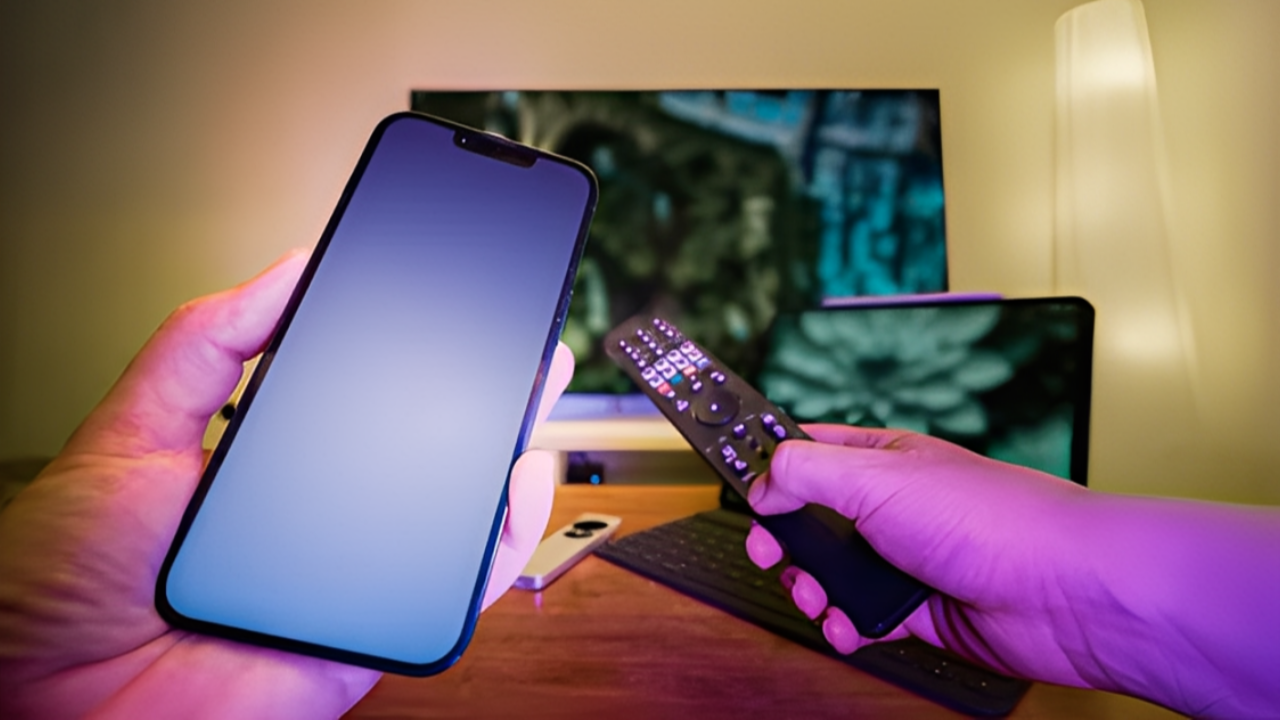
Why You Feel Busy All Day but Still Go to Bed Frustrated
Every time you answer “just one quick thing,” your brain learns something dangerous: that anyone else’s urgency outranks your priorities. But what if the real problem isn’t your willpower at all?
What if it’s the way your day is designed?
Here’s what most driven people won’t admit:
They don’t lose focus because they’re lazy—they lose it because they’re overconfident.
They believe:
“I can keep my phone near me and not check it.”
“I can listen to notifications and still stay in deep work.”
“I can be available for everyone and still move my big goals forward.”
The hard truth? Every distraction you allow doesn’t just steal that minute—it breaks the mental “momentum chain” you needed to do your best work. You don’t just pay in time; you pay in quality.
Instead of trying to summon more discipline, the sustainable path is to starve your distractions at the source and design your environment so focus becomes the easy default.
Picture this:
It’s 9:00 AM. A shop owner sits down to finally work on next quarter’s growth plan. This is the deep work that actually moves the business forward.
He opens his laptop.
Calendar. Spreadsheet. Numbers. Strategy.
Then it happens.
A text from a friend.
A quick glance at email.
A notification from Instagram.
A Slack ping from the team.
He tells himself, “I’ll just handle this real quick.”
Fast-forward 90 minutes.
He’s answered messages, put out two small fires, watched one short video, checked the shop cameras twice, and “skimmed” his inbox. His brain feels cooked… and the growth plan is still a blank page.
He’s been busy—but not productive.
Now imagine another version of this owner.
Same 9:00 AM. Same goal.
But this time, he starves his distractions in advance:
- Phone in another room, on Do Not Disturb
- Email tab closed
- Team knows he’s “offline” for 90 minutes unless the building is on fire
- Only one document open: the growth plan
He sets a 50-minute timer, takes a 10-minute break, then another 40-minute block.
By 10:40 AM, he has a clear target revenue, a hiring plan, and three key projects mapped out. Not perfect, but real progress.
One owner ends the day saying, “I was slammed all day but didn’t get to the important stuff.”
The other ends it saying, “I finally moved the ball on what actually matters.”
Pull-quote: “You don’t rise to the level of your goals. You fall to the level of your distractions.”
Why Your Brain Loves Distractions (Even When You Don’t)
Why this happens:
Your brain is wired to chase quick wins and avoid hard, uncertain work. Every notification is a little dopamine hit—fast, easy, and emotionally safe. Deep work, on the other hand, feels risky:
“What if I get stuck?”
“What if this isn’t good enough?”
“What if I waste time on the wrong thing?”
So your brain happily trades meaningful progress for quick, shallow tasks that feel productive but don’t move the needle.
Quick prompt:
What’s the first distraction you usually say “yes” to when you’re supposed to be focusing?
Micro-action (≤ 15 min):
For the next work session, write down every distraction you allow—text, email, social, coworker, anything. Don’t judge it. Just track it. Awareness is step one.
The Environment Wins Every Time
Why this happens:
We overestimate our self-control and underestimate our environment. We assume we can “just ignore” the buzzing phone, the open inbox, or the chat bubbles. But your environment is constantly pulling on your attention—whether you notice it or not.
If distractions are easy and focus is hard, you will always default to distraction over time.
Quick prompt:
If a stranger walked into your workspace, would they instantly know what your #1 priority is—or would they assume you’re a professional notification checker?
Micro-action:
Before your next important task, remove one distraction from your environment:
- Put your phone in another room
- Close all tabs except the one you need
- Turn off desktop notifications
- Put on headphones (even without sound) as a “do not disturb” signal
Do this for one 30–50 minute block. Notice how different it feels.
Building Focus Rituals That Stick
Why this happens:
We treat focus like a mood instead of a system. We wait to “feel ready” instead of having a simple ritual that tells our brain, “Now we do deep work.”
Rituals reduce friction. They turn focus from a stressful decision into a habit.
Quick prompt:
If you had a 3-step “focus ritual” that you did every time you needed to get serious work done, what would it be?
Micro-action:
Create a 3-step focus ritual you can do in under 3 minutes. For example:
- Set a 40–50 minute timer
- Put your phone in another room & close email
- Write your #1 outcome for this session on a sticky note and place it in front of you
Run this ritual once today—even for a short task.
Protecting Your Best Hours
Why this happens:
We give our sharpest mental hours to everyone else’s priorities—messages, meetings, questions—and save our most important work for when we’re already tired.
That’s like putting low-octane fuel into a high-performance engine and wondering why it misfires.
Quick prompt:
When are you naturally at your best—morning, midday, or evening—and how often do others own that time?
Micro-action:
Block off your best 60–90 minutes in your calendar tomorrow for deep work only. Label it clearly:
“Focus Block: No meetings, no messages.”
Treat it like a non-negotiable appointment with your future success.
Try This in 10 Minutes
Pick one meaningful task you’ve been avoiding—writing, planning, fixing a bottleneck, training a team member.
Then:
- Choose a 30–50 minute focus window
- Put your phone in another room
- Close every tab except what you need for this task
- Write at the top of a page:
“By the end of this session I will have ________.” - Start a timer and don’t switch tasks until it goes off
When the timer ends:
- Write down what you finished
- Rate your focus from 1–10
- Note the #1 distraction you almost gave into
Do this just once. You’ll see how much work you can actually get done when your brain isn’t constantly switching lanes.
This Week’s Checklist
- Identify your #1 recurring distraction and add one layer of friction (move the app, log out, or delete it from your phone during the workweek).
- Block three focus sessions of 40–60 minutes on your calendar (phone away, notifications off).
- Create and practice your 3-step focus ritual before each session.
- Tell your team or family:
“From X–Y each day, I’ll be heads-down. If it’s not urgent, I’ll respond after.” - At the end of the week, review:
- What did I actually finish during my focus blocks?
- What distractions still snuck in?
- What will I starve next week?
Your Turn
In the last 7 days, how many hours did you mean to work on something important… and how many did you actually give it?
What would change in your business (or life) if you protected just 90 minutes a day for distraction-free, focused work?
Commit:
“Within the next 24 hours, I will schedule one distraction-free focus block and remove at least one major distraction from my environment.”
Want more practical, no-fluff strategies to protect your focus, grow your business, and actually finish what matters?
Join our weekly newsletter for tools, prompts, and systems that help you work with intention—not just intensity.
Visit www.gofuelcoaching.com to get started.
If you’re tired of feeling like your business is running you instead of the other way around…
👉 Book your free strategy call here — together, we’ll uncover the simple shifts that can take your business from good to exceptional.